
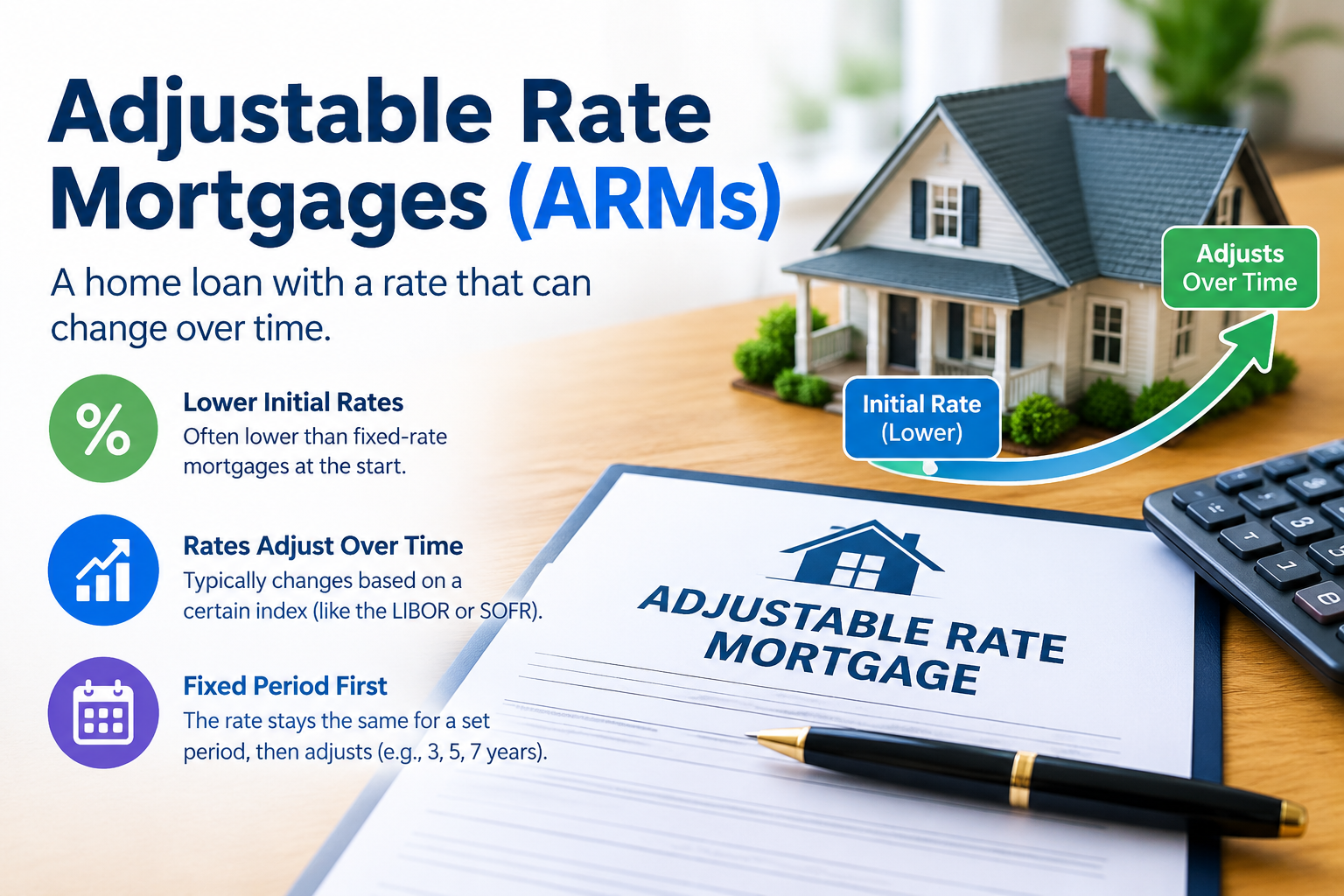
Adjustable Rate Mortgages in USA: 8 Exposed Solutions
If you have been shopping for a home loan in 2026, you have probably heard the term adjustable rate mortgage in USA come up more than once. These loans can look very attractive at first glance because their starting interest rates are often lower than fixed-rate options. But they come with moving parts that not every borrower fully understands. This guide breaks down exactly how they work, what risks you should watch for, and eight real solutions that can help you make a smarter decision.
- What Are Adjustable Rate Mortgages in USA
- How ARM Loan Rate Caps Protect Borrowers
- Fixed vs Adjustable Mortgage: Which One Fits You
- Understanding Mortgage Rate Reset Risk
- Adjustable Rate Mortgages in USA: 8 Exposed Solutions
- Who Benefits Most from ARMs in 2026
- Frequently Asked Questions
- Final Thoughts
What Are Adjustable Rate Mortgages in USA
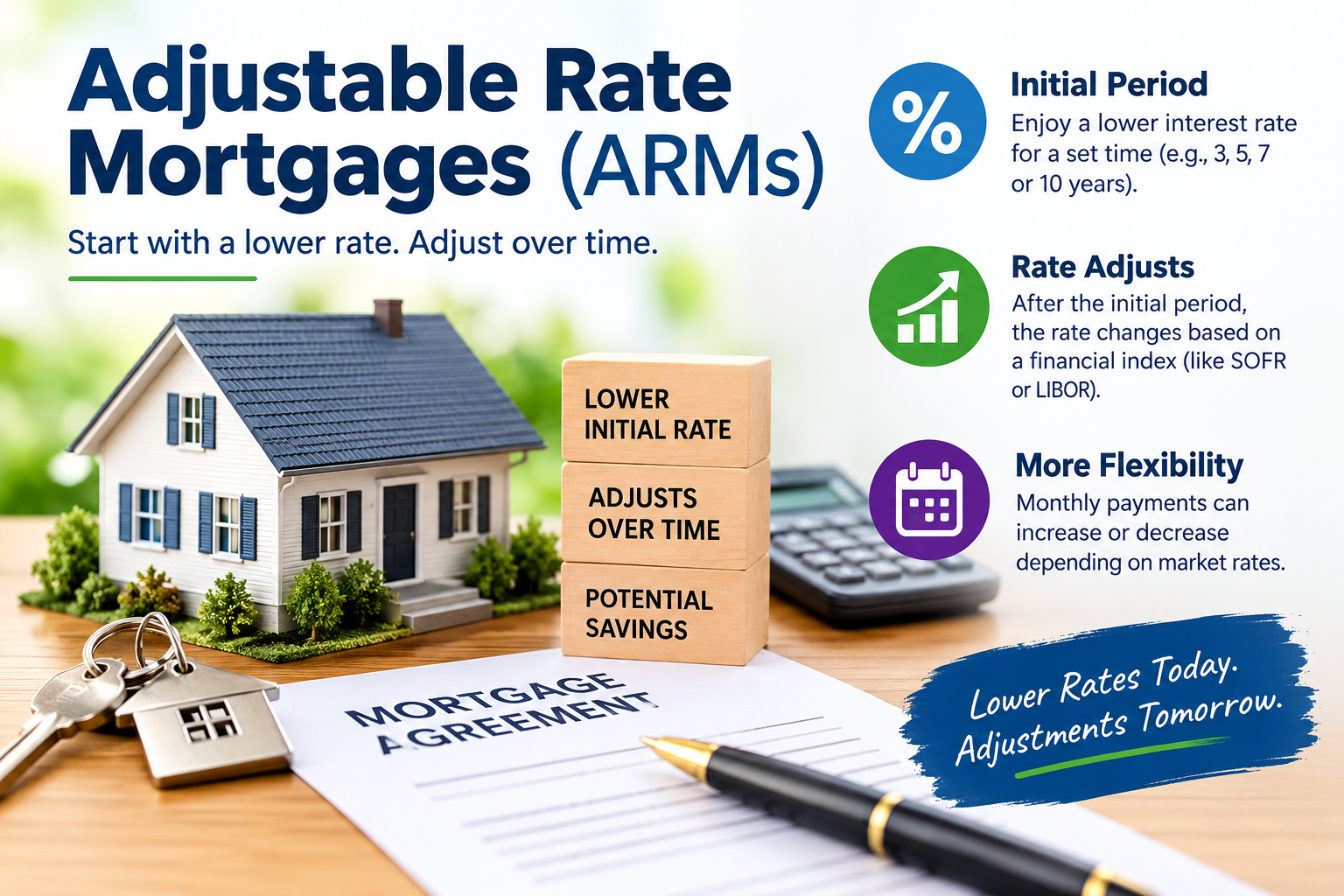
An adjustable rate mortgage, commonly called an ARM, is a home loan where the interest rate changes periodically after an initial fixed period. In the USA, the most common versions are the 5/1 ARM, the 7/1 ARM, and the 10/1 ARM. The first number tells you how many years your rate stays fixed. The second number tells you how often it adjusts after that.
For example, a 5/1 ARM keeps the same rate for five years, then adjusts once every year. In 2026, many lenders are offering initial ARM rates that sit noticeably below 30-year fixed mortgage rates. That difference can translate to hundreds of dollars saved each month during the introductory period, which is part of why ARMs are back in the conversation for many buyers.
The key thing to understand is that once the fixed period ends, your rate moves in line with a benchmark index, usually the Secured Overnight Financing Rate, or SOFR, which replaced LIBOR as the standard reference rate. Your lender then adds a margin on top of that index, and the result is your new interest rate.
How Lenders Set ARM Starting Rates
Lenders price ARM starter rates based on shorter-term market expectations rather than long-term bond yields, which is why they tend to be lower than fixed rates. In 2026, with the Federal Reserve holding rates in a moderately elevated range, ARM teaser rates are appealing to buyers who plan to sell or refinance within a few years. However, the rate you start with is not the rate you will keep, and that distinction matters enormously over the life of a 30-year loan.
How ARM Loan Rate Caps Protect Borrowers
One of the most misunderstood features of adjustable rate mortgages in USA is the cap structure. Caps limit how much your interest rate can move, which provides a meaningful layer of protection if rates spike unexpectedly. Every ARM must legally disclose its cap structure before you sign.
There are three types of caps you need to know:
- Initial adjustment cap: The maximum your rate can jump at the first adjustment. Often set at 2 percentage points.
- Periodic adjustment cap: The maximum it can rise or fall at each subsequent adjustment. Usually also 2 percentage points per year.
- Lifetime cap: The absolute ceiling over the entire loan. Typically 5 percentage points above the start rate.
So if your ARM starts at 5.5 percent, the lifetime cap means it can never exceed 10.5 percent, regardless of what happens in broader markets. ARM loan rate caps are not just legal fine print. They are a core part of how you evaluate whether an ARM is a reasonable risk for your situation.
Always ask your lender for the worst-case payment scenario based on the lifetime cap. Running those numbers before you sign gives you a realistic ceiling on what your monthly payment could become if things go badly in the rate environment.
Fixed vs Adjustable Mortgage: Which One Fits You
The fixed vs adjustable mortgage debate really comes down to how long you plan to stay in the home and how comfortable you are with uncertainty. Fixed-rate mortgages give you predictability. Your principal and interest payment will never change, which makes budgeting straightforward for the long term.
ARMs offer lower starting payments but introduce variability. If you know you will sell or refinance before the fixed period ends, an ARM can be a financially smart choice. If you plan to stay in the home for 20 or 30 years, the stability of a fixed rate usually wins out.
In 2026, with home prices still elevated in most major metros, some buyers are using ARMs specifically to qualify for a larger loan amount during the low-rate introductory phase, then planning to refinance if rates drop. That strategy carries its own risks, but it is a real reason why ARM applications have climbed this year.
Situations Where an ARM Makes Sense
- You plan to sell within five to seven years.
- You expect your income to grow significantly, making higher future payments manageable.
- You believe interest rates will fall before your first adjustment.
- You want to maximize cash flow in the early years of homeownership.
- You are buying a home in a high-cost market and need a lower initial payment to qualify.
Understanding Mortgage Rate Reset Risk
Mortgage rate reset risk is the chance that your ARM adjusts to a rate that makes your monthly payment unaffordable. This is not a theoretical problem. During the housing crisis of 2008, many borrowers faced payment shocks when their ARMs reset to much higher rates than expected. While today’s market is structurally different and regulations are stricter, the underlying risk has not disappeared.
In 2026, with the SOFR index sitting in a range most economists describe as historically elevated, borrowers need to think carefully about where rates might move. If the Fed cuts rates significantly over the next few years, ARM holders could actually benefit from lower resets. If rates stay elevated or climb, reset risk becomes very real.
The Consumer Financial Protection Bureau offers resources that help borrowers understand mortgage disclosures and calculate adjustment scenarios. You can explore those tools at consumerfinance.gov, which is a reliable source for understanding your rights as a borrower and reading the fine print on ARM disclosures.
The best defense against mortgage rate reset risk is building a financial cushion. If your ARM resets and your payment rises by 200 dollars a month, can your budget absorb that? Running stress tests on your household budget before choosing an ARM is a step too many buyers skip.
Adjustable Rate Mortgages in USA: 8 Exposed Solutions
Here are eight practical solutions that address the most common challenges and misunderstandings around adjustable rate mortgages in USA.
- Always calculate the worst-case payment. Ask your lender to show you what your payment looks like if the rate hits the lifetime cap. Build your budget around that number, not the starter rate.
- Choose a longer fixed period when uncertain. A 10/1 ARM gives you a full decade of stability. If you are not sure how long you will stay, lean toward longer fixed windows.
- Negotiate the margin, not just the rate. The index moves on its own, but the margin your lender adds is negotiable. Even a 0.25 percent reduction in the margin saves you money every time the rate adjusts upward.
- Build an emergency fund before closing. Having three to six months of mortgage payments saved gives you a buffer if your rate resets unexpectedly.
- Track your index closely. Monitor the SOFR index annually so you are never surprised when your adjustment date arrives. Many online dashboards now offer free rate tracking tools.
- Plan your refinance window in advance. If rates drop or your credit score improves significantly, refinancing before your fixed period ends can lock in better terms before the first reset.
- Read the disclosure document carefully. Federal law requires lenders to give you an ARM disclosure booklet. Read every page. Pay special attention to the adjustment frequency, the caps, and the index used.
- Compare total cost, not just monthly payments. Use a loan comparison calculator to add up the total interest paid under ARM and fixed scenarios over the time horizon you actually plan to stay in the home.
Who Benefits Most from ARMs in 2026
Not every borrower is a good candidate for an adjustable rate mortgage, but for the right person, they offer genuine financial advantages. In 2026, three groups tend to benefit the most from ARM products in the US market.
First, short-term buyers who plan to upgrade or relocate within five years get the clearest benefit. They enjoy lower initial payments without ever reaching the adjustment phase. Second, high-income earners with strong savings who can absorb payment variability without stress often use ARMs to optimize cash flow. Third, real estate investors who hold properties for a defined window often use ARMs to reduce carrying costs during the hold period.
It is worth mentioning that some business owners who are managing multiple financial obligations, such as a business line of credit or equipment financing, may prefer the lower ARM payment to keep overall cash flow flexible. That said, mixing business and personal financial strategies requires careful planning with a qualified advisor.
First-time buyers in entry-level price brackets are generally not the ideal ARM audience, especially if they are stretching their budget to qualify. Payment certainty matters more when your financial margin is thin, and the fixed vs adjustable mortgage question often resolves clearly in favor of a fixed product for borrowers in that position.
Frequently Asked Questions About Adjustable Rate Mortgages in USA
Are adjustable rate mortgages in USA still popular in 2026?
Yes, ARMs have seen renewed interest in 2026 as home prices remain elevated and buyers look for ways to reduce initial monthly payments. According to mortgage application data tracked by industry groups, ARM share of new applications climbed noticeably in the first half of 2026 compared to prior years. The gap between ARM starter rates and 30-year fixed rates has made them attractive again, particularly for buyers in high-cost markets like California, New York, and Massachusetts who need lower payments to qualify for larger loan amounts.
What is the biggest risk with adjustable rate mortgages in USA?
The biggest risk is payment shock when the rate adjusts upward. If your ARM resets at the maximum periodic cap every year until it hits the lifetime cap, your monthly payment could be several hundred dollars higher than when you started. Borrowers who do not plan for this scenario can find themselves financially stretched. Mortgage rate reset risk is most severe for buyers who chose an ARM because it was the only way they could qualify, leaving no room in their budget for higher payments later.
How do ARM loan rate caps limit my exposure?
ARM loan rate caps set hard limits on how much your interest rate can change at each adjustment and over the life of the loan. A typical 2/2/5 cap structure means the rate can rise no more than 2 percentage points at the first adjustment, no more than 2 points per year after that, and no more than 5 points total above the starting rate. These caps mean your maximum possible rate is knowable from day one. Running your budget based on the capped rate gives you a realistic worst-case monthly payment to plan around.
Can I refinance out of an ARM before it adjusts?
Yes, refinancing before your ARM’s fixed period ends is a common and often smart strategy. If market rates have dropped or your credit profile has improved since you took the original loan, you may qualify for a fixed-rate product at a favorable rate. The key is to start the process several months before your adjustment date so you have enough time to shop lenders, get approved, and close without rushing. Keep in mind that refinancing does involve closing costs, typically 2 to 5 percent of the loan amount, so the math has to make sense for your situation.
What index do most adjustable rate mortgages in USA use in 2026?
The vast majority of new ARM products issued in the USA in 2026 use the Secured Overnight Financing Rate, known as SOFR, as their benchmark index. SOFR replaced the London Interbank Offered Rate, LIBOR, which was phased out. SOFR reflects the cost of borrowing cash overnight collateralized by US Treasury securities. It is published daily by the Federal Reserve Bank of New York. When your ARM adjusts, your new rate is calculated by adding your lender’s fixed margin to the current SOFR value, giving you a transparent and verifiable rate-setting mechanism.
Final Thoughts on Adjustable Rate Mortgages in USA
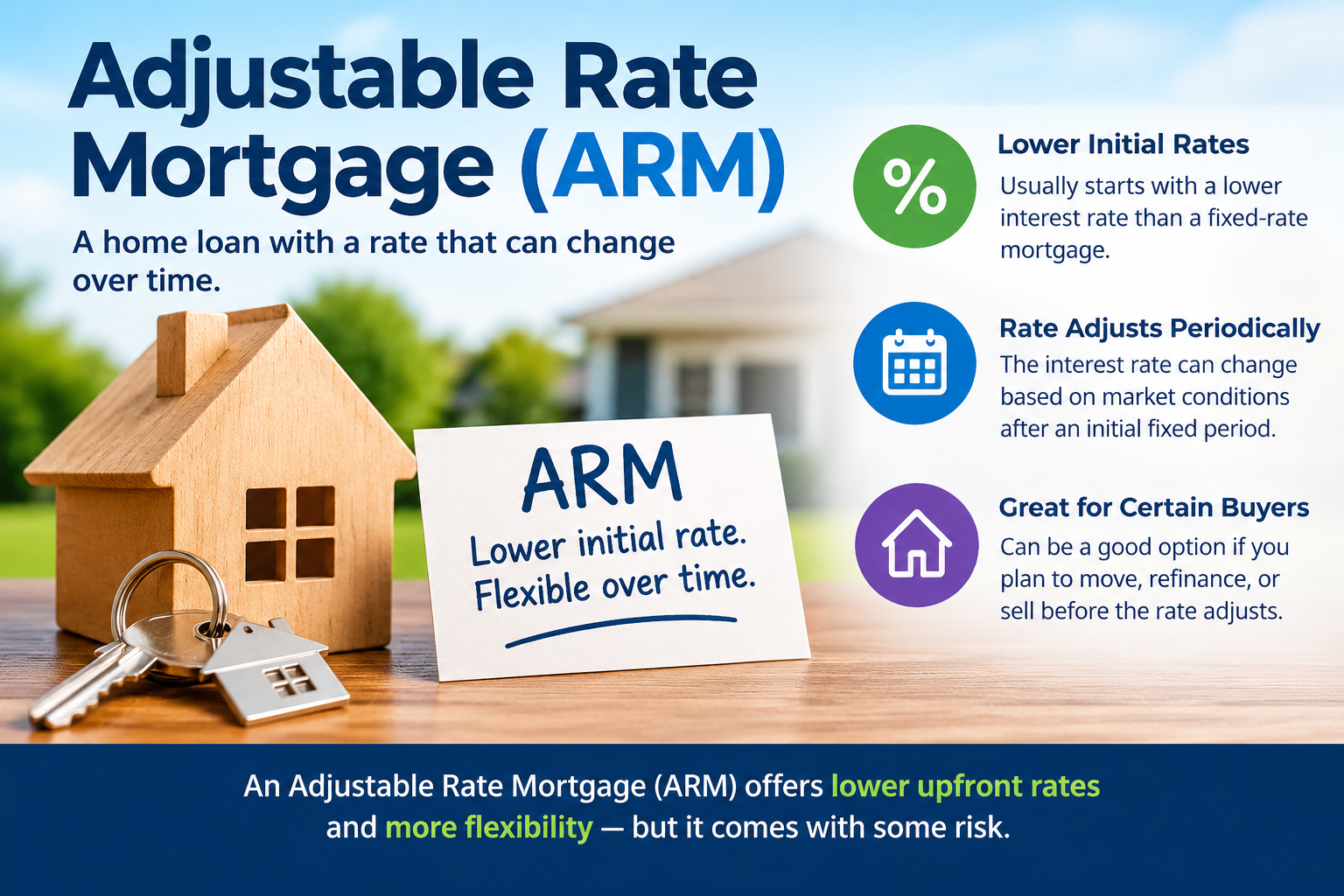
Adjustable rate mortgages in USA are not inherently good or bad. They are a tool, and like any financial tool, their value depends entirely on how well they match your situation. In 2026, with starter rates offering meaningful savings over fixed alternatives, more buyers are giving ARMs a serious look, and that makes sense as long as the decision is made with eyes open.
The eight solutions covered in this article give you a practical framework for evaluating whether an ARM is right for you. Calculate worst-case payments. Understand your caps. Know your adjustment index. Plan your exit strategy before you sign. These are not complicated steps, but they make the difference between using an ARM smartly and getting caught off guard by a rate reset you did not see coming.
Whatever you decide, the fixed vs adjustable mortgage choice deserves more than a quick comparison of starting rates. Think through your timeline, your financial cushion, and your tolerance for uncertainty. That honest self-assessment is the foundation of a mortgage decision you can feel good about for years ahead.