Top tips for effective water damage restoration Dallas.
Are you facing the nightmare of water damage in your Dallas home? Whether it’s a burst pipe, a roof leak, or storm-related flooding, prompt action is crucial to prevent further destruction. Water damage can lead to significant losses if not addressed immediately.
You need to act fast to save your home from the devastating effects of water damage. Understanding the importance of emergency water damage repair and knowing the right steps to take can make a significant difference. In this article, we will guide you through the essential tips for effective water damage restoration Dallas, ensuring you are equipped to handle such emergencies.
Emergency Steps to Take When Water Damage Strikes
The moment you discover water damage, it’s essential to spring into action to protect your home. Water damage can lead to significant destruction if not addressed promptly.
Safety First: Turn Off Electricity and Check for Hazards
Your safety is paramount. If possible, switch off the electricity to prevent electrocution risks. Be cautious of potential hazards such as loose wires, sharp debris, and structural damage to your home.
Stop the Water Source Immediately
If the water damage is due to a burst pipe or another controllable source, turn off the main water supply to your home. This step is crucial in preventing further damage.
Document Everything for Insurance Claims
For insurance purposes, it’s vital to document the damage thoroughly. Take photos and videos of the affected areas and items. Keep a record of correspondence with your insurance company and any expenses related to the damage.
By following these emergency steps, you can minimize the impact of water damage on your home. Acting quickly and being prepared are key to a successful recovery.
DIY Water Damage Cleanup Methods
Effective DIY water damage cleanup involves removing standing water, drying the area thoroughly, and preventing mold growth. You can minimize damage by acting quickly and using the right techniques.
Removing Standing Water with Available Tools
You can remove standing water using buckets, mops, or wet vacuums. If the water has penetratedated deeply into walls or under flooring, you may need to use more specialized equipment or call a professional. Act quickly to prevent further damage.
Effective Drying Techniques for Dallas Humidity
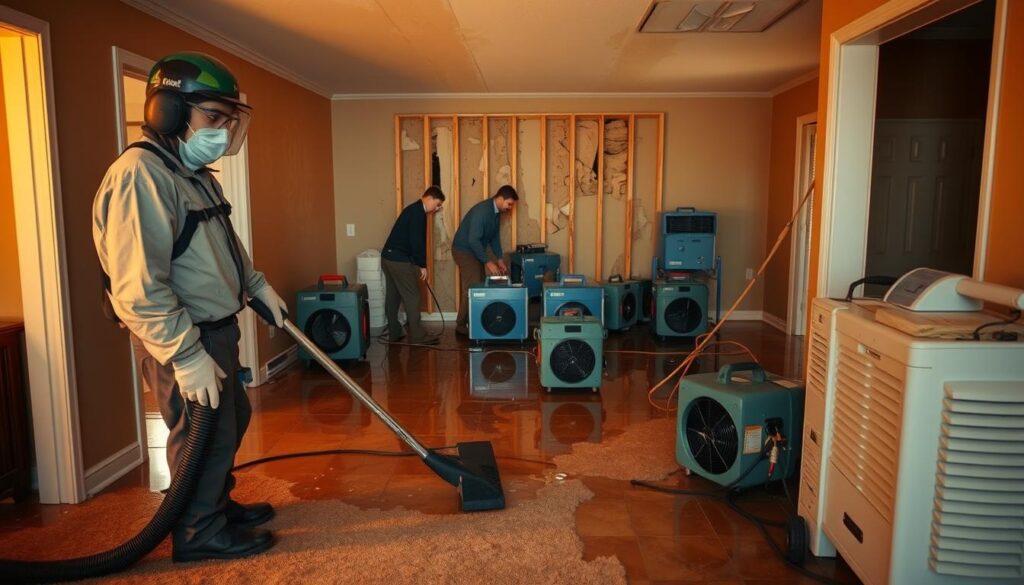
Drying the affected area is crucial, especially in humid climates like Dallas. You can use fans, dehumidifiers, or open windows to improve ventilation. Be cautious when opening windows to avoid letting in more moisture. Using the right equipment can significantly reduce drying time.
Preventing Mold Growth in the First 24-48 Hours
Mold can begin to grow within 24 to 48 hours after water damage. To prevent this, you should thoroughly dry the area and use mold-inhibiting products. Monitoring the area for signs of mold is crucial. If you notice mold, take immediate action to remediate it.
Salvaging and Cleaning Affected Items
You can salvage many items damaged by water by cleaning and disinfecting them. For porous items like drywall or carpeting, it may be necessary to replace them entirely. Proper cleaning and drying can save valuable possessions. Ensure that all cleaned items are thoroughly dried to prevent mold growth.
Professional Water Damage Restoration Dallas Services
When water damage strikes, knowing when to call in the professionals can save you time and stress. Professional water damage restoration Dallas services in can provide expert help in assessing and repairing water damage, using advanced equipment and techniques to restore homes to their original condition.
Signs You Need Professional Help
If you notice any of the following, it’s time to call a professional water damage restoration Dallas, signs of mold growth, or if you’re unsure about how to properly dry out your home. Professional water damage restoration Dallas can mitigate further damage and ensure your home is safe and healthy.
Top-Rated Restoration Companies in Dallas
Look for companies with excellent customer reviews, proper certifications, and a comprehensive range of services. Some top-rated restoration companies in Dallas specialize in water damage restoration, mold remediation, and reconstruction. They use state-of-the-art equipment to dry your home quickly and efficiently.
What to Expect: Process, Timeline, and Costs
The restoration process typically begins with an assessment and inspection, followed by water removal, drying, and finally, repairs or reconstruction. The timeline can vary from a few days to several weeks, depending on the extent of the damage. Costs also vary widely based on the scope of the work needed. Be sure to get detailed estimates from your chosen restoration company to understand what to expect.
Protecting Your Dallas Home from Future Water Damage
To safeguard your Dallas home against future water damage, regular home maintenance is crucial. You should regularly inspect your home’s plumbing system for leaks, clean gutters, and check your roof for damaged or missing shingles. By taking these proactive steps, you can significantly reduce the risk of water damage. Additionally, consider installing smart water sensors that can detect leaks early, and ensure your homeowner’s insurance policy covers water damage. By being proactive with water damage prevention and home maintenance, you can protect your Dallas home and avoid costly repairs.
Are you struggling to find affordable housing in urban areas? You’re not alone. As cities continue to grow and housing prices skyrocket, many people are finding it increasingly difficult to secure a place to live without breaking the bank. But don’t worry, there are affordable housing solutions out there that can help you find a comfortable and budget-friendly home in the heart of the city. In this article, we will explore some of the best options available for urban dwellers looking for affordable housing.
What are the Challenges of Finding Affordable Housing in Urban Areas?
Finding affordable housing in urban areas can be a daunting task. The demand for housing often exceeds the supply, driving up prices and making it difficult for many people to find a place to live that fits their budget. Additionally, many urban areas have strict zoning laws and building regulations that can limit the construction of new affordable housing units. This can further exacerbate the housing crisis and make it even harder for individuals and families to find affordable accommodation in the city.
How to Find Affordable Housing Solutions?
While the task of finding affordable housing in urban areas may seem overwhelming, there are actually several solutions available to help you secure a budget-friendly home. Here are some tips to consider:
Government Subsidized Housing: Many governments offer subsidized housing programs for low-income individuals and families. These programs provide housing at reduced rates, making it easier for those on a tight budget to afford a place to live in the city.
Shared Housing: Sharing a living space with roommates or housemates can significantly reduce your housing costs. By splitting rent and utilities, you can save money and still enjoy the benefits of living in an urban area.
Micro-Units: Micro-units are small, compact living spaces that are designed to maximize efficiency and minimize costs. These units are becoming increasingly popular in urban areas, offering a more affordable housing option for those looking to live in the city.
Affordable Housing Developments: Many cities have affordable housing developments that are specifically designed to provide affordable housing options for low and moderate-income individuals. These developments often come with amenities and services that make urban living more accessible.
Rent Control: Some cities have rent control regulations in place that limit the amount landlords can increase rent each year. This can help stabilize housing costs and make it easier for tenants to afford their rent in the long term.
Finding affordable housing solutions in urban areas can be challenging, but it’s not impossible. By exploring government subsidized housing programs, shared housing options, micro-units, affordable housing developments, and rent control regulations, you can find a budget-friendly home in the heart of the city. Don’t let high housing prices discourage you from living where you want to be. With the right resources and strategies, you can find the affordable housing solution that works best for you.
So, have you considered any of these affordable housing solutions for urban dwellers? With the right resources and strategies, you can find a budget-friendly home in the heart of the city. Don’t let high housing prices discourage you from living where you want to be!
Shopping for homeowners insurance isn’t something you do every day. Once you’ve picked a policy, you’re likely to stick with it for at least a year. That means that when you do shop for a policy, it’s crucial to compare home insurance quotes to ensure you’re getting a good price.
Comparing quotes helps you identify the best coverage at the most competitive rates. It’s not just about finding the cheapest option; it’s also about considering the policy’s coverage and the insurer’s reliability. By doing your research, you can save big on your home insurance.
Consider factors beyond cost, such as policy coverage and insurer reliability.
Shopping around can help you save big on your homeowners insurance.
Researching and comparing quotes ensures you’re getting the best coverage.
Don’t settle for the first policy you find; explore your options.
Understanding Home Insurance Basics
Before diving into the world of home insurance quotes, it’s essential to grasp the basics. You need to understand the types of coverage available, the factors that affect your premium rates, and how to set the right coverage limits.
Types of Coverage You Need to Know
Home insurance policies typically include several types of coverage. Dwelling coverage protects the physical structure of your home, while personal property coverage covers your belongings. Liability coverage is also crucial, as it protects you against lawsuits for bodily injury or property damage.
Factors That Affect Your Premium Rates
Several factors influence your home insurance premium rates. The location, age, and condition of your home play a significant role, as do your credit score and claims history. Understanding these factors can help you make informed decisions to lower your premiums.
Setting the Right Coverage Limits
Determining the right coverage limits is vital to ensure you have adequate protection without over-insuring. You should assess the value of your home and belongings to set appropriate limits. Regularly reviewing and updating your policy can help you stay protected and avoid unnecessary costs.
How to Compare Home Insurance Quotes Effectively
To get the best deal on home insurance, you need to know how to compare quotes effectively. This involves several key steps that will help you make an informed decision and potentially save you a significant amount of money.
Gathering Your Home Information First
Before you start comparing home insurance quotes, it’s crucial to gather all the necessary information about your home. This includes its value, location, security features, and any other relevant details. Having this information readily available will make it easier to get accurate quotes from insurance providers.
Using Online Comparison Tools
One of the most efficient ways to compare home insurance quotes is by using online comparison tools. These tools allow you to enter your information once and receive multiple quotes from different insurance companies. This not only saves time but also gives you a clear overview of the available options.
Questions to Ask Insurance Providers
When comparing home insurance quotes, it’s not just about the price; it’s also about the coverage and service provided. Make sure to ask insurance providers about their policy details, including what is covered, the deductible, and any exclusions. You should also inquire about their customer service and claims process.
Reading the Fine Print in Policy Details
Once you’ve narrowed down your options, it’s essential to read the fine print in the policy details. This includes understanding the terms and conditions, coverage limits, and any exclusions or limitations. Don’t hesitate to ask questions if you’re unsure about any aspect of the policy.
By following these steps, you can effectively compare home insurance quotes and find the best coverage for your needs at a price that fits your budget.
Smart Strategies to Save Big on Your Home Insurance
You can significantly lower your home insurance costs by implementing a few smart strategies. Many insurers offer discounts for things like having a smoke-free home, being retired, or installing safety features. You can take advantage of these insurance discounts to save on home insurance.
Bundling your home and auto insurance policies is another effective way to reduce your premiums. Insurance companies often reward customers who purchase multiple policies with discounts. You can also save by increasing your deductible, but be sure to maintain enough coverage to protect your assets.
Maintaining a good credit record is crucial, as insurers often use credit scores to determine premium rates. By keeping your credit score high, you can qualify for lower insurance rates. Additionally, making home improvements such as installing storm shutters or a new roof can also lead to insurance discounts. By following these insurance tips, you can enjoy significant savings on your home insurance without compromising on the quality of your coverage.
Buying a House in New York? See When You Need to Know.
Are you considering buying a house in New York? It can be an exciting yet daunting experience, especially for first-time buyers. New York’s real estate market is known for being competitive and fast-paced, but with the right knowledge and preparation, you can navigate the process smoothly. In this article, we will discuss some essential tips for first-time buyers looking to purchase a home in the bustling city of New York.
Buying a House in New York:
When it comes to buying a house in New York, there are a few key factors to consider to ensure a successful purchase. Here are some essential tips to keep in mind:
Research the Market:
Before diving into the home-buying process, it’s essential to research the New York real estate market thoroughly. Familiarize yourself with the different neighborhoods, property types, and current market trends. This will help you make informed decisions and negotiate effectively.
Set a Budget:
One of the most crucial steps in buying a house is setting a realistic budget. Consider factors such as your income, expenses, and desired location. Keep in mind that New York is known for its high property prices, so be prepared to make compromises if needed.
Get Pre-Approved for a Mortgage:
Before starting your house hunt, it’s recommended to get pre-approved for a mortgage. This will give you a clear idea of how much you can afford to spend on a home and will make your offer more attractive to sellers.
Work with a Real Estate Agent:
Navigating the New York real estate market can be challenging, especially for first-time buyers. Consider working with a reputable real estate agent who has experience in the area. An agent can help you find properties that meet your criteria, negotiate offers, and guide you through the closing process.
Consider the Location:
New York City is a diverse metropolis with neighborhoods to suit every lifestyle. Consider factors such as commute times, amenities, schools, and safety when choosing a location. Think about your long-term plans and how the neighborhood will meet your needs.
Attend Open Houses:
Attending open houses is a great way to get a feel for the local real estate market and see what’s available in your desired area. Take note of the property’s condition, layout, and any potential red flags. Don’t be afraid to ask questions and gather as much information as possible.
Make a Strong Offer:
When you find a property you love, be prepared to make a strong offer. In a competitive market like New York, sellers may receive multiple offers, so it’s crucial to stand out. Work with your real estate agent to draft a compelling offer that includes your desired price, contingencies, and closing timeline.
Conduct a Home Inspection:
Before finalizing the purchase, it’s essential to conduct a thorough home inspection. This will help uncover any potential issues with the property, such as structural defects, pest infestations, or mold. Be prepared to negotiate with the seller based on the inspection results.
Close the Deal:
Once your offer is accepted, it’s time to close the deal. Work with your real estate agent, lender, and attorney to finalize the paperwork and transfer ownership of the property. Be prepared for closing costs, which typically include fees for the mortgage, appraisal, and title insurance.
Buying a house in New York can be a rewarding experience with the right knowledge and preparation. By following these essential tips for first-time buyers, you can navigate the real estate market with confidence and secure the home of your dreams in the vibrant city of New York.
Purchasing a house is a big decision, and it’s essential to do your research and seek professional guidance throughout the process. Good luck with your home-buying journey in New York!
When it comes to selling your home, one of the first questions that comes to mind is: “How much is my house really worth?” Determining the value of your property is crucial in the home selling process as it can ultimately impact the final sale price. In this homeowner’s guide, we will explore the various factors that can influence the value of your home and how you can determine its true worth.
Factors Affecting Home Value:
Location
One of the most significant factors that can impact the value of your home is its location. Properties in desirable neighborhoods with good schools, amenities, and low crime rates tend to have higher values compared to those in less desirable areas.
Size and Layout
The size and layout of your home also play a crucial role in determining its value. Larger homes with more bedrooms and bathrooms typically command higher prices than smaller properties.
Condition of the Property
The overall condition of your home, including any updates or renovations, can affect its value. Well-maintained properties with modern finishes are likely to have higher valuations than those in need of repairs.
Comparable Sales
Looking at recent sales of similar properties in your area can give you a good indication of what your home is worth. It’s essential to compare apples to apples and consider factors such as square footage, age, and amenities.
How to Determine the Value of Your Home:
Online Valuation Tools
There are numerous online tools available that can provide you with an estimated value of your home based on recent sales data in your area. While these tools can be a good starting point, it’s essential to remember that they are not always accurate.
Hire a Professional Appraiser
For a more accurate assessment of your home’s value, consider hiring a professional appraiser. Appraisers consider various factors, including the condition of the property, comparable sales, and market trends, to determine the fair market value of your home.
Real estate agents have a wealth of knowledge about the local market and can provide you with a comprehensive analysis of your home’s value. They can also help you determine the best listing price based on current market conditions.
Consider Market Trends
Keep an eye on market trends in your area, such as supply and demand, interest rates, and economic indicators. These factors can impact the value of your home and influence how quickly it sells.
Conclusion:
For you, asking how much is my house worth, sure! Determining the value of your home is a crucial step in the home selling process. By considering factors such as location, size, condition, and comparable sales, you can get a better idea of what your property is worth. Whether you use online valuation tools, hire a professional appraiser, or consult with a real estate agent, it’s essential to gather as much information as possible to make an informed decision. By taking the time to assess the value of your home accurately, you can maximize your return on investment and achieve a successful sale.
So, how much is your house really worth? The answer depends on various factors such as location, size, condition, and market trends. By taking the time to assess these factors and gather as much information as possible, you can determine the true value of your home and set a competitive listing price. Remember, knowledge is power when it comes to selling your home!
Selling your home quickly can be tough, but it’s doable with the right plan. Today’s market is competitive. You need to make your home stand out to catch the eye of buyers.
A quick home sale needs good preparation, pricing, and marketing. Knowing what buyers want and showing your home at its best can help a lot. This way, you boost your chances of selling successfully.
Key Takeaways
Prepare your home for sale by decluttering and staging.
Price your home competitively based on market analysis.
Utilize effective marketing strategies to attract potential buyers.
Consider working with a real estate agent for expert guidance.
Be flexible with showings and negotiations to close the sale quickly.
Understanding the Current Real Estate Market
Understanding the real estate market is crucial to sell my home fast. Many factors influence this market, like local conditions, seasonal trends, and economic indicators.
Local Market Conditions and Trends
Local market conditions greatly affect how quickly your home sells. Knowing if you’re in a buyer’s or seller’s market is important. In a seller’s market, homes sell faster because demand is high. In a buyer’s market, homes may take longer to sell.
Seasonal Considerations for Home Sales
Seasonality also plays a big role in home sales. Spring and early summer are usually the best times to sell. This is because the weather is good and the school year is ending. Timing your sale with these seasons can be very helpful.
Economic Factors Affecting Home Sales
Economic factors like interest rates and employment rates also matter a lot. Low interest rates make buyers more active. High employment rates increase housing demand. Watching these economic signs can help you know the best time to sell.
Economic Indicator
Impact on Home Sales
Low Interest Rates
Increased Buyer Activity
High Employment Rates
Increased Demand for Housing
Economic Downturn
Decreased Buyer Activity
Preparing Your Home Before Listing
Before you list your home, it’s key to get it ready for buyers. A well-prepared home can attract more buyers and help you get a better price.
Essential Repairs and Maintenance
First, tackle the important repairs and upkeep. Fix leaky faucets, patch walls, and make sure doors and windows work right. Quick fixes can really help your home look its best.
Quick Fixes with High ROI
Some quick fixes can bring in a lot of value. A fresh coat of paint, for example, can make your home look newer. Real estate pros say, “A fresh coat of neutral paint can attract many buyers and is an affordable way to improve your home’s look.”
A well-maintained home gives buyers confidence in their purchase.
When to Skip Major Renovations
Not all repairs are worth it. Major renovations can be expensive. It’s smart to think about the cost and how much you’ll get back. Talking to a real estate agent can help you decide which renovations are worth it.
Deep Cleaning Strategies
Deep cleaning can make your home sparkle. Pay attention to spots like behind appliances and inside cabinets. A clean home looks better and feels more welcoming to buyers.
Decluttering and Depersonalizing
Decluttering and making your home feel neutral can help buyers see themselves living there. Remove personal items and too much furniture. This makes your home feel bigger and more inviting.
How to Sell My Home for Top Dollar
To get the best price for your home, you need to use smart pricing strategies. Knowing your home’s value and setting the right price is key. This can make your sale successful.
Comparative Market Analysis
A comparative market analysis (CMA) compares your home to similar ones in your area. It looks at recent sales and homes for sale now. This helps find a fair and competitive price for your home.
It considers things like your home’s size, condition, and features. A CMA gives you insights into the market trends.
Strategic Pricing Techniques
Setting the right price for your home is crucial. Two good ways are pricing lower than market value and using psychological pricing.
Pricing Below Market Value
Listing your home for less than its value can attract more buyers. This might lead to more offers and a higher sale price. But, be careful not to price too low.
Psychological Pricing Points
Psychological pricing makes your home seem more affordable. For example, pricing at $299,000 instead of $300,000 can make a difference. This can sway buyers’ choices and make your home stand out.
Price Adjustment Strategies
Keep an eye on your home’s performance and adjust the price if needed. If it’s not getting enough attention, a price change can help. Regularly check market feedback and adjust your pricing to stay competitive.
Use a detailed CMA and smart pricing strategies. Be ready to adjust your price. This way, you can sell your home for the best price in today’s market.
Home Staging That Attracts Buyers
Home staging is an art that can make your home more appealing to buyers. It’s not just about making it look good. It’s about creating a welcoming atmosphere that makes buyers feel at home.
Interior Staging Tips
When staging your home’s interior, aim for a welcoming and neutral look. This means more than just cleaning. It’s about showing your home in its best light.
Living Room and Kitchen Focus
The living room and kitchen are key areas. Make sure they are bright and free of clutter. Arrange furniture to highlight the rooms’ best features.
Use neutral-colored furniture and decor to appeal to a wide range of buyers.
Ensure the kitchen is spotless and consider staging it with fresh flowers or a bowl of fruit.
Bedroom and Bathroom Presentation
Bedrooms and bathrooms should be calm and inviting. Use soft lighting and calming colors to create a relaxing feel.
“A well-staged bedroom can be the deciding factor for many buyers. It’s essential to make it feel like a retreat.” –
Exterior and Curb Appeal Improvements
The exterior of your home is the first thing buyers see. Improve curb appeal by keeping the lawn neat, trimming bushes, and adding colorful plants or flowers.
Curb Appeal Element
Improvement Idea
Lawn
Maintain a lush, green lawn by regular mowing and watering.
Bushes and Plants
Trim bushes and add colorful plants or flowers to enhance visual appeal.
Front Door
Paint or replace the front door to make a great first impression.
Virtual Staging Options
Virtual staging is great for empty homes or sellers who want to show their property’s potential. It digitally furnishes and decorates your home’s online listings.
Virtual staging can be particularly useful for vacant homes or for highlighting specific features of a property.
Professional Photography and Virtual Tours
To stand out in a competitive real estate market, using professional photography and virtual tours is key. High-quality visuals grab the attention of potential buyers. They show your home in its best light.
Hiring a Professional Photographer
A professional photographer can greatly impact how your home looks online. They know about lighting, composition, and highlighting your home’s best parts. A real estate expert says, “A well-photographed home can attract more viewers and potentially lead to more offers.”
Creating Compelling Virtual Tours
Virtual tours give buyers an immersive experience, letting them explore your home from afar. This is great for out-of-town buyers or those with busy schedules. A good virtual tour can boost engagement and encourage more visits.
Drone Photography for Larger Properties
For bigger properties or those with large outdoor spaces, drone photography offers a unique view. It shows off the property’s surroundings, like gardens, pools, or big views. This gives buyers a better idea of the property’s layout and features.
By using professional photography, virtual tours, and drone photography, you can show your home in a detailed and appealing way. This can attract more potential buyers and help speed up the sale process.
Effective Marketing Strategies
In today’s competitive real estate market, the right marketing strategies can make a big difference. A good plan helps your property reach more people and attract buyers.
Online Listing Optimization
Getting your home’s online listing right is key for visibility. It’s not just about listing on big real estate sites. Your listing must be engaging and accurate.
MLS Listing Best Practices
Listing on the Multiple Listing Service (MLS) is a must. To get the most out of it, include high-quality photos, detailed descriptions, and accurate property info.
Keep your MLS listing current. Update it with any changes in price, condition, or other important details.
Writing Compelling Descriptions
A great description can really make your listing stand out. Emphasize your home’s unique features, like modern kitchens or big backyards.
Use descriptive language to help buyers picture themselves in your home. This makes it easier for them to imagine living there.
Social Media Marketing Tactics
Social media is a great way to market your home. Create interesting content that shows off your property’s best sides. Share it on Facebook, Instagram, and Twitter.
Use the right hashtags and tag real estate groups or local communities. This helps you reach more people.
Traditional Marketing Methods
Even though digital marketing is important, traditional methods still work. Use targeted print ads in local magazines or newspapers to reach buyers who prefer these.
Hosting open houses is also a good idea. It can attract buyers and create excitement around your property.
Working with Real Estate Professionals
To sell your home smoothly, it’s key to know how to work with real estate pros. They bring their market know-how to help you reach your goals.
Selecting the Right Real Estate Agent
Finding the right agent is vital. Look for someone with extensive experience in your area and a history of successful sales. Make sure they have a good marketing plan for your home.
Check their online reviews and ask for references.
Ensure they are familiar with the local real estate laws and regulations.
Discuss their commission rates and the services they provide.
For Sale By Owner Considerations
Selling by owner can cut commission costs, but it’s a big job. You’ll handle everything from pricing to paperwork. Think if you have the necessary skills and knowledge for this.
Working with Home Inspectors and Appraisers
Inspectors and appraisers are key in selling your home. Inspectors find issues, and appraisers set the value. Their reports help you address any concerns and price right.
Professional
Role
Benefits
Real Estate Agent
Guides you through the selling process
Expertise in local market, marketing strategies
Home Inspector
Identifies potential issues with your property
Helps in addressing concerns, transparency for buyers
Appraiser
Determines the value of your property
Ensures competitive pricing, aids in negotiations
Alternative Quick-Sale Options
Selling your home fast doesn’t always mean going through traditional channels. Alternative methods can be effective. For homeowners facing urgent situations or those looking for a hassle-free experience, exploring these options can be beneficial.
Cash Buyers and iBuyers
Cash buyers and iBuyers offer a quick sale solution by purchasing homes directly. Cash buyers are real estate investors or companies with the funds to buy properties outright. iBuyers use technology to make instant offers on homes. While these options provide speed and certainty, they often come with trade-offs, such as lower sale prices.
Real Estate Investors
Real estate investors are another alternative for quick home sales. These investors usually look for properties to rent out or renovate and resell. They often buy homes in any condition, which can be advantageous for sellers who don’t have the time or money to make repairs. Working with real estate investors can streamline the selling process, but it’s crucial to research and understand their terms and conditions.
Auction Sales
Auction sales represent a more aggressive approach to selling a home quickly. By listing a property at an auction, sellers can attract multiple bidders, potentially driving up the sale price. However, auction sales come with risks, such as the possibility of not meeting the reserve price. It’s essential for sellers to understand the auction process and the associated fees before proceeding.
In conclusion, alternative quick-sale options like cash buyers, real estate investors, and auction sales provide homeowners with a range of choices. Each option has its advantages and disadvantages. Selecting the right one depends on the seller’s specific circumstances and priorities.
Handling Showings and Negotiating Offers
Selling your home fast is all about handling showings and negotiating offers well. As a homeowner, knowing how to manage showings and negotiate offers is key. It can make a big difference in selling your home quickly.
Preparing for Showings and Open Houses
To impress potential buyers, prepare your home well for showings and open houses. Here are some tips:
Cleanliness is key: Make sure your home is spotless, especially in bathrooms and kitchens.
Declutter and depersonalize: Remove unnecessary items and personal decor to help buyers see themselves in the space.
Stage your home: Arrange furniture and decor to highlight your home’s best features.
Also, think about when to schedule showings. Open houses during busy times can draw more buyers.
Evaluating and Comparing Offers
When looking at offers, don’t just focus on the price. Consider these factors:
Offer price: The amount the buyer is offering.
Contingencies: Conditions that must be met for the sale to go through, like financing or inspections.
Closing timeline: The proposed date for the sale to be completed.
It’s also important to check the buyer’s financial stability and their ability to get financing.
Counteroffer Strategies
Getting an offer is just the start; negotiating the terms is the real challenge. When thinking about a counteroffer, consider:
Price adjustments: Are you open to lowering the price, or do you want to keep your original asking price?
Contingency negotiations: Can you negotiate the terms of contingencies to better fit your needs?
Good negotiation is about finding a deal that works for both sides.
Dealing with Multiple Offers
In a competitive market, you might get multiple offers. When this happens, consider:
Evaluating each offer carefully: Compare the terms, contingencies, and prices of each offer.
Negotiating with multiple buyers: You can talk to multiple buyers at once, but be careful of potential issues.
The goal is to get the best deal for your home.
Conclusion
To sell your home fast, you need to prepare well, market it right, and price it smartly. This article has given you tips and strategies to help you sell quickly and for the best price.
Getting your home ready is the first step. This means fixing things, cleaning deeply, and getting rid of clutter. Also, pricing your home right is key. It makes sure your home stands out in the market.
Working with real estate experts and using smart marketing can help a lot. It makes your home more visible and appealing to buyers. Whether you want a quick sale or the highest price, the right strategy can help you succeed.
FAQ
How long does it typically take to sell a home?
Selling a home’s time frame varies. It depends on the local market, your home’s condition, and how you price it. On average, it can take from a few weeks to months.
What are some ways to determine the value of my home?
You can use online tools like Zillow or Redfin to estimate your home’s value. Talking to a real estate agent or hiring an appraiser is also a good idea. A comparative market analysis can show your home’s value by comparing it to similar homes.
Should I make repairs or renovations before selling my home?
Repairs and renovations can boost your home’s value and appeal. Focus on repairs that offer a good return, like fixing faucets or updating lights. Major changes might not be needed, especially for a quick sale.
How can I stage my home to attract buyers?
To stage your home, declutter, depersonalize, and arrange furniture to look welcoming. Consider a professional stager or online resources for ideas. Show off your home’s best features, like natural light or a nice backyard, to attract buyers.
What is the role of a real estate agent in selling my home?
A real estate agent guides you through selling your home. They help with pricing, marketing, and negotiations. They also handle paperwork, showings, and offer insights into the local market.
Can I sell my home to a cash buyer or iBuyer?
Yes, you can sell to a cash buyer or iBuyer. They buy homes quickly with cash. But, they might offer lower prices than the market.
How do I handle multiple offers on my home?
When you get multiple offers, look at the price, contingencies, and financing. Your agent can help you evaluate and decide on each offer.
What are some common mistakes to avoid when selling my home?
Avoid overpricing, not staging your home, and not being ready for showings. Knowing the local market and adjusting your strategy is key.
Real estate Investment Opportunities for investors
Are you considering getting into the world of real estate investment but don’t know where to start? Well, you’re in luck! In this article, we will explore some of the best real estate investment opportunities for beginners to help you kickstart your journey towards financial success.
Why Invest in Real Estate?
Before we dive into the top investment opportunities, let’s first understand why real estate is a great investment option. Real estate has long been considered a stable and lucrative investment, offering individuals the opportunity to generate passive income, build equity, and diversify their investment portfolio.
Top Real Estate Investment Opportunities for Beginners
Rental Properties: Investing in rental properties is a popular choice for beginners as it allows you to generate monthly rental income while also benefiting from property appreciation over time. This option is relatively hands-on, as you will be responsible for managing tenants, maintenance, and other property-related tasks.
Real Estate Investment Trusts (REITs): REITs are a good option for individuals looking to invest in real estate without directly owning a property. REITs allow you to invest in a portfolio of properties managed by a professional team. This option provides diversification and liquidity, making it a great choice for beginners.
Fix and Flip: For those with a knack for renovation and flipping properties, this can be a profitable investment opportunity. By purchasing distressed properties, renovating them, and selling them for a profit, you can quickly generate returns on your investment.
Real Estate Crowdfunding: Real estate crowdfunding platforms allow individuals to invest in properties with a smaller capital investment. This option provides access to commercial and residential properties without the need for direct ownership or management.
How to Get Started
Now that you know some of the top real estate investment opportunities for beginners, it’s time to take the first step towards building your real estate portfolio. Here are some tips to help you get started:
Educate Yourself: Before diving into real estate investment, take the time to educate yourself on the market, investment strategies, and potential risks. Consider reading books, taking courses, or seeking advice from experienced investors.
Set Investment Goals: Clearly define your investment goals, whether it be generating passive income, building equity, or achieving financial freedom. Having clear goals will help guide your investment decisions and strategy.
Create a Budget: Determine how much capital you are willing to invest in real estate and create a budget that aligns with your financial goals. Consider factors such as property costs, maintenance expenses, and potential rental income.
In Conclusion
Real estate investment offers countless opportunities for beginners to build wealth, generate passive income, and diversify their investment portfolio. By exploring different investment options, setting clear goals, and educating yourself on the market, you can embark on a successful real estate investment journey. So, are you ready to take the plunge into the world of real estate investment opportunities?
Property valuation is a crucial aspect of the real estate industry. Whether you are a buyer, seller, or investor, understanding how to accurately assess the value of a property is essential for making informed decisions. In this article, we will provide you with valuable tips for conducting accurate real estate assessments.
Property Valuation: The Basics
When it comes to property valuation, there are several key factors to consider. These include the location of the property, its size, condition, and amenities. Additionally, market trends, zoning regulations, and comparable sales in the area can also impact the value of a property.
To accurately assess the value of a property, it is important to conduct thorough research and analysis. This may involve hiring a professional appraiser or conducting your own research using online tools and resources. By taking the time to gather all relevant information, you can ensure that you are making an informed decision.
Tips for Accurate Real Estate Assessments
Consider Market Trends: Keep an eye on market trends in the area where the property is located. Is the market hot or cold? Are prices rising or falling? By understanding the current market conditions, you can more accurately assess the value of the property.
Compare Comparable Sales: Look at recent sales of similar properties in the area. How do these properties compare to the one you are assessing? By looking at comparable sales, you can get a better idea of what the property is worth.
Evaluate the Condition of the Property: Take a close look at the condition of the property. Are there any repairs or renovations that need to be done? Assessing the condition of the property can help you determine its value more accurately.
Consider Zoning Regulations: Zoning regulations can have a significant impact on the value of a property. Make sure you understand the zoning laws in the area and how they may affect the property you are assessing.
Get Professional Help: If you are unsure about how to assess the value of a property, consider hiring a professional appraiser. An appraiser can provide you with an unbiased assessment of the property and help you make an informed decision.
Be Realistic: When assessing the value of an estate, it is important to be realistic. Don’t let emotions cloud your judgment. Instead, rely on concrete data and analysis to determine the true value of the property.
Conclusion
Property valuation is an essential aspect of the real estate industry. By following the tips outlined in this article, you can conduct accurate real estate assessments and make more informed decisions when buying, selling, or investing in property. Remember to consider market trends, compare comparable sales, evaluate the condition of the property, understand zoning regulations, and seek professional help when needed. By taking a systematic approach to property valuation, you can ensure that you are getting the most value out of your real estate investments.
Learn About Flood restoration and how to Restore Your Property After a Flood .
Are you facing the daunting task of dealing with water damage caused by a flood? It can be overwhelming to see your home or business in disarray due to water intrusion. However, with the right information and approach, you can successfully restore your property to its former glory. In this article, we will outline the essential steps for flood restoration to help you navigate this challenging process with ease.
Assessing the Damage
The first step in flood restoration is to assess the extent of the damage. Take a thorough look around your property to identify areas that have been affected by water. Make a note of any structural damage, waterlogged furniture, appliances, or personal belongings. This assessment will help you prioritize the cleanup and restoration efforts.
Safety First
Before you start the restoration process, ensure that the electricity and gas supply to your property are turned off. Water and electricity are a dangerous combination, so it is crucial to prioritize safety. Wear protective gear such as gloves, boots, and a mask to protect yourself from contaminated water and mold spores.
Water Extraction
The next step is to remove standing water from your property. Depending on the severity of the flood, you may need to use a pump, wet-dry vacuum, or buckets to extract the water. It is essential to remove water as quickly as possible to prevent further damage and the growth of mold and mildew.
Drying and Dehumidification
Once the standing water has been removed, the next step is to dry out the affected areas. Use fans, dehumidifiers, and open windows to promote air circulation and speed up the drying process. It is crucial to thoroughly dry out the property to prevent mold growth and odors.
Cleaning and Sanitizing
After the property has been dried out, it is time to clean and sanitize all surfaces. Use a mixture of water and bleach to disinfect walls, floors, and furniture. Remove any mold or mildew growth using specialized cleaners. Pay special attention to hidden and hard-to-reach areas to ensure thorough cleaning.
Restoration and Repairs
Once the property has been cleaned and sanitized, it is time to start the restoration and repair process. Replace damaged drywall, flooring, and insulation. Repair leaky pipes or roof damage to prevent future water intrusion. Consider hiring a professional flood restoration company for larger restoration projects.
Preventive Measures
To prevent future water damage, consider taking preventive measures such as installing sump pumps, sealing cracks in the foundation, and ensuring proper drainage around your property. Regular maintenance and inspections can help you spot potential issues before they escalate into major problems.
In conclusion, dealing with water damage from a flood can be challenging, but with the right approach, you can successfully restore your property. By following the essential steps outlined in this article, you can mitigate the damage and get your property back to its pre-flood condition. Remember, safety should always be your top priority during the restoration process. By taking proactive measures and seeking professional help when needed, you can ensure a smooth and successful flood restoration experience.
Remember, prompt action is crucial when dealing with water damage. The longer water sits, the more damage it can cause. So don’t hesitate to start the restoration process as soon as possible to minimize the impact of the flood on your property.
Expert Tips for Choosing Reliable Air Conditioner Repair Services .
Are you facing issues with your air conditioner and in need of reliable repair services? Finding the right professionals to fix your AC unit is crucial to ensure it operates efficiently and effectively. Here are some expert tips to help you choose reliable air conditioner repair services:
Experience Matters
When looking for AC repair services, experience is key. Make sure to choose a company that has been in the business for a significant amount of time. Experienced technicians will have the knowledge and skills to diagnose and fix a wide range of AC problems quickly and efficiently.
Check for Certifications and Licenses
It’s essential to verify that the air conditioner repair company you choose has the necessary certifications and licenses to operate in your area. Certified technicians are trained to handle AC repairs safely and effectively, giving you peace of mind that your unit is in good hands.
Ask for Recommendations
One of the best ways to find reliable air conditioner repair services is to ask for recommendations from friends, family, or neighbors who have had positive experiences with repair companies in the past. Personal referrals can help you narrow down your options and choose a reputable service provider.
Look for Online Reviews
Before hiring an air conditioner repair service, take the time to read online reviews and testimonials from previous customers. Look for companies with positive feedback and high ratings, as this is a good indicator of the quality of their services.
Inquire About Pricing
When contacting air conditioner repair services, be sure to inquire about their pricing structure. Ask for a detailed estimate of the costs involved in the repair process, including any parts that may need to be replaced. Compare quotes from multiple companies to ensure you’re getting a fair price for the services you need.
Check for Warranty
It’s always a good idea to choose an air conditioner repair service that offers a warranty on their work. A warranty gives you peace of mind that if any issues arise after the repair, the company will come back and fix it at no extra cost to you.
Availability and Response Time
In case of an AC emergency, it’s essential to choose a repair service that offers quick response times and flexible scheduling options. Look for companies that are available 24/7 and can respond promptly to your needs.
Customer Service
Lastly, pay attention to the level of customer service provided by the air conditioner repair company. Choose a company that is professional, courteous, and willing to answer any questions or concerns you may have about the repair process.
In conclusion, choosing reliable air conditioner repair services is crucial to keeping your AC unit running smoothly. By following these expert tips, you can find a reputable repair company that meets your needs and ensures your comfort during the hot summer months.
Buying a home is one of the biggest financial decisions you will make in your lifetime. For most people, this involves securing a mortgage to cover the cost of the property. Here are some essential tips to help you navigate the home mortgage process and secure your dream home.
What is a Home Mortgage?
A home mortgage is a loan that is used to purchase a home. The borrower agrees to pay back the loan amount, plus interest, over a set period of time. The home itself acts as collateral for the loan, meaning that if the borrower fails to make their payments, the lender has the right to repossess the property.
How to Secure the Best Home Mortgage
1. Check Your Credit Score
Your credit score plays a significant role in determining the interest rate you will be offered on your mortgage. Before applying for a home loan, make sure to check your credit score and take steps to improve it if necessary.
2. Research Lenders
Don’t just settle for the first mortgage lender you come across. Take the time to research different lenders and compare their rates and terms. Shopping around can help you secure the best deal possible.
3. Get Pre-Approved
Getting pre-approved for a home mortgage can give you a clear idea of how much you can afford to borrow. This can help you narrow down your home search and make you a more attractive buyer to sellers.
4. Understand the Different Types of Mortgages
There are several different types of home mortgages available, each with its own set of terms and conditions. Make sure you understand the differences between fixed-rate mortgages, adjustable-rate mortgages, and other options before making a decision.
5. Calculate All Costs
When budgeting for a home mortgage, don’t forget to factor in all associated costs, such as property taxes, insurance, and closing costs. Make sure you can comfortably afford all of these expenses in addition to your monthly mortgage payments.
6. Work with a Mortgage Broker
A home mortgage broker can help you navigate the home loan process and connect you with lenders who meet your specific needs. They can also help you understand complex mortgage terms and negotiate the best possible deal on your behalf.
Securing a home mortgage can be a complex process, but with the right knowledge and preparation, you can make the experience as smooth as possible. By following these essential tips, you can increase your chances of securing a mortgage that fits your budget and helps you achieve your dream of homeownership.
Remember, when it comes to securing a home mortgage, knowledge is power. By taking the time to educate yourself about the process and following these essential tips, you can increase your chances of securing your dream home and making your homeownership dreams a reality.
Keep Your Home Cool With These Expert AC Repair Tips.
In the scorching heat of summer, there is nothing worse than your air conditioning unit breaking down. As a homeowner, it’s essential to know some AC repair tips to keep your home cool and comfortable. By following these expert guidelines, you can troubleshoot common issues and potentially save yourself from costly repairs. Read on to discover the best practices for maintaining and fixing your AC unit.
Why is AC Maintenance Important?
Regular maintenance is key to ensuring your air conditioning unit operates efficiently and effectively. Neglecting routine upkeep can lead to decreased performance, higher energy bills, and even system failures. By following these AC repair tips, you can prolong the lifespan of your unit and keep your home cool all summer long.
Clean or Replace Air Filters Regularly
One of the most straightforward yet crucial AC repair tips is to clean or replace your air filters regularly. Clogged filters can restrict airflow, causing your unit to work harder and consume more energy. Make it a habit to check your filters at least once a month and clean or replace them as needed.
Keep the Outdoor Unit Clean
Another essential maintenance tip is to keep the outdoor unit clean and free of debris. Over time, dirt, leaves, and other debris can accumulate around the unit, obstructing airflow and hindering its performance. Use a hose to gently spray off any dirt or debris and trim back any overgrown vegetation around the unit.
Check and Clean the Coils
The coils in your air conditioning unit play a crucial role in heat transfer. Over time, dirt and debris can accumulate on the coils, reducing their efficiency. Regularly check the coils for any buildup and use a coil cleaner to remove dirt and grime. Keeping the coils clean will ensure optimal performance and energy efficiency.
Schedule Regular Professional Maintenance
While there are many AC repair tips you can do yourself, it’s also essential to schedule regular professional maintenance. An HVAC technician can inspect your unit, identify any potential issues, and make necessary repairs or adjustments. By investing in regular maintenance, you can catch problems early and prevent costly repairs down the line.
Address Strange Noises or Odors
If you notice strange noises or odors coming from your air conditioning unit, it’s essential to address them promptly. These can be signs of underlying issues that need to be addressed before they escalate. Contact a professional HVAC technician to diagnose the problem and make the necessary repairs.
Monitor Energy Consumption
Monitoring your energy consumption is another crucial AC repair tip for homeowners. If you notice a sudden increase in your energy bills, it could be a sign that your unit is not operating efficiently. Keep track of your energy usage and consult with a professional if you have concerns about your AC unit’s performance.
Conclusion
By following these essential AC repair tips, you can ensure your air conditioning unit operates efficiently and effectively. Regular maintenance, cleaning filters and coils, and addressing any issues promptly are key to keeping your home cool and comfortable. Remember to schedule regular professional maintenance to catch any potential problems early and keep your unit running smoothly. With these expert guidelines, you can enjoy a cool and comfortable home all summer long.